
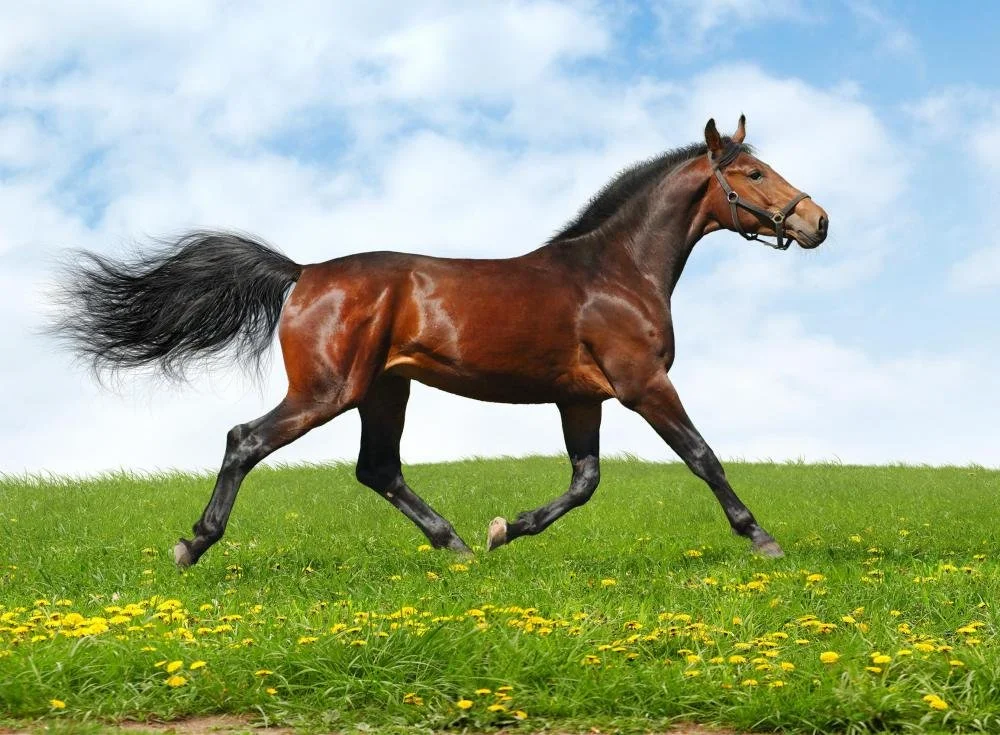
Blog Post Five: Ways your horse is trying to communicate with you that they are in pain
Horses are a prey species so showing signs of weakness can be an alert to a potential predator that they may be an easy target. Therefore, some horses can be incredibly stoic, and their signs of pain may be masked. Look for these changes in behavior, gaits, and habits that might signify that your horse is in pain:
Grooming
having trouble turning around in the crossties
constantly shifting from one leg to another
pawing
being overly quite or dull (change in behavior)
pinning ears back while being brushed
swishing tail while being brushed
biting at the crossties or the air or towards you
giving the “stink eye”
trying to move away
teeth grinding
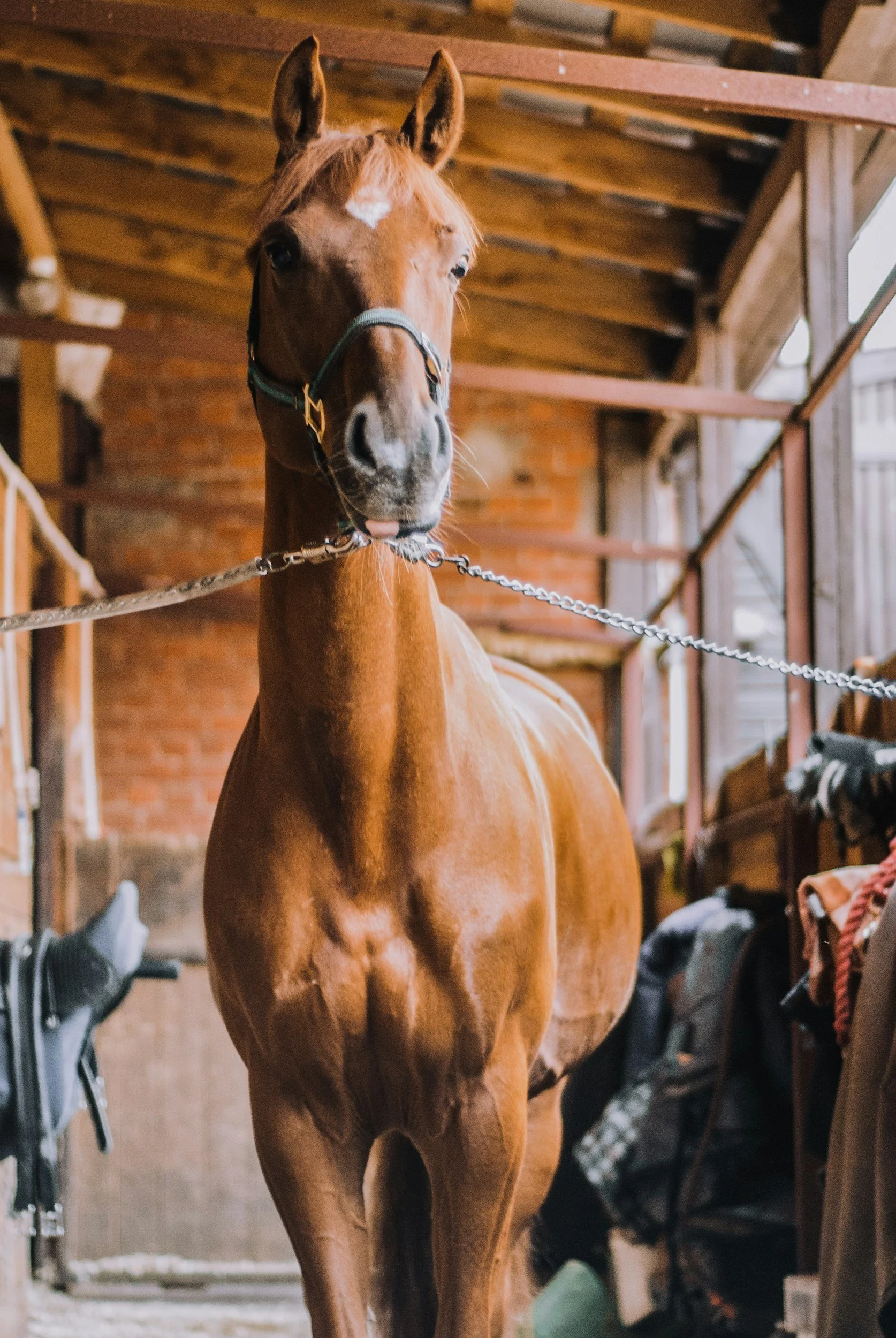
Tacking Up
moving away or doing any of the above movements when you put on the saddle pad, saddle and/or while girthing up
turning their head away from you when you go to put the bridle on them
keeping head in a lowered position
Lifting head out of reach when you go to put on the bridle
rounding or hollowing of the back
muscle spasms or twitching
overly yawning or stretching after the tack has been removed
Riding
sighing or groaning when you get on
trying to move away when you get on, especially if this is a new behavior
not wanting to move forward off your leg
kicking out at your leg
having a difficult time picking up one lead or the other in canter
throwing their head up in upward transitions
raising their head to walk forward out of a rein-back
having trouble backing up under saddle or in hand
showing more reluctance to move forward
restricted or shortened strides
stiffness
Additional
uneven muscle development/change in muscle tone
moving away from you when you go to catch them in their stall or pasture
having to use their neck instead of their hindend to get up from rolling/sleeping
not being able to do or needing alot of aide to perform belly lifts
increased heart or respiratory rate
tension around the eyes or nostrils
You should run your hands all along your horse before and after every ride to make sure your horse does not flinch away from your touch, which may be an indication that something is wrong. Do you feel any heat or swelling anywhere (especially on the legs)?
I once, literally, had a horse who previously did none of these things, start doing almost all of these behaviors, seemingly overnight. At first I noticed, but didn’t think much of it. As more and more of these behaviors became the norm, I finally had to realize that my horse was trying to tell me that he was really hurting. Then I didn’t know what to do. I tried to wait it out, giving him some time off and hoping it would get better with a break. Now I kick myself that I did not do something sooner to recognize, and then help mitigate, his pain.
Be your horse’s advocate. Notice changes in behavior, in muscle development/lack there of, ability, desire to work. Call your veterinarian or see if bodywork will help. And if the bodywork helps, great. If not, call your vet.
Blog Post One: How to tell if your horse is in pain using RHpE
It all begins with an idea.
As an owner, we do not want our horses to be in pain, so
how do you know if your horse is exhibiting signs of pain?
is there a quantitative way of measuring pain?
how often should you asses your horse?
if you notice certain signs of pain or a certain level of pain, when do you contact your vet or bodyworker?
It is easier to prevent an injury than to have to deal with the aftermath of an injury (and its rehab), so catching a problem early is paramount.
What is RHpE? It stands for Ridden Horse Pain Ethogram and was designed by Drs. Sue Dyson and Danica Pollard and described in their scientific article titled “Application of the Ridden Horse Pain Ethogram to Elite Dressage Horses Competing in World Cup Grand Prix Competitions” (2001).
The following are excerpts from the article:
“A Ridden Horse Pain Ethogram (RHpE) was developed comprising 24 behaviors; a score of ≥8/24 is likely to reflect the presence of musculoskeletal pain. The aim of the study was to apply the RHpE to elite dressage horses, competing at World Cup Grand Prix qualifying competitions or finals. It was hypothesised that this should be a group of horses with a low incidence of musculoskeletal pain; thus, RHpE scores would be consistently <8.
The RHpE was applied by a trained assessor to video recordings of 147 competitors at nine venues.
The median RHpE score for all competitors was 3/24 (range 0, 7).
There was a high frequency of occurrence of head behind vertical ≥10 degrees ≥10 seconds, mouth open with separation of the teeth ≥10 seconds, and repeated tail swishing, behaviors that should be penalized according to FEI rules.
It was nonetheless concluded that most horses appeared to work comfortably for the majority of the test.
In contrast, in a study of a convenience sample of 148 sports and leisure horses in the UK, believed by their owners (both amateur and professional riders) to be working comfortably, 62% were lame when ridden, and 60% of horses showed gait abnormalities in canter, specifically (Dyson S., Bondi A., Routh J., Pollard D. “Gait abnormalities and ridden horse behavior in a convenience sample of the United Kingdom ridden sports horse and leisure horse population”. Equine Vet. Educ. 2020). The median RHpE score for this group of horses was 8/24. There was a positive association between lameness and the RHpE score. This study highlighted the need to educate owners and trainers about lameness recognition and the RHpE.
Table 1. Summary of the 24 behaviors of the Ridden Horse Pain Ethogram (adapted from Dyson et al. 2001,).
Definitions of Each of the Behaviors
1. Repeated changes of head position (up/down), not in rhythm with the trot
2. Head tilted or tilting repeatedly
3. Head in front of vertical (≥30◦ ) for ≥10 s
4. Head behind vertical (≥10◦ ) for ≥10 s
5. Head position changes regularly, tossed or twisted from side to side, corrected constantly
6. Ears rotated back behind vertical (both or one only) for ≥5 s; repeatedly lay flat
7. Eye lids closed or half closed for 2–5 s; frequent blinking
8. Sclera exposed repeatedly
9. Intense stare (glazed expression, “zoned out”) for ≥5 s
10. Mouth opening ± shutting repeatedly with separation of teeth, for ≥10 s
11. Tongue exposed, protruding or hanging out, and/or moving in and out repeatedly
12. Bit pulled through the mouth on one side (left or right), repeatedly
13. Tail clamped tightly to middle or held to one side
14. Tail swishing large movements: repeatedly up and down/side to side/circular; repeatedly during transitions
15. A rushed gait (frequency of trot steps >40/15 s); irregular rhythm in trot or canter; repeated changes of speed in trot or canter
16. Gait too slow (frequency of trot steps <35/15 s); passage-like trot
17. Hindlimbs do not follow tracks of forelimbs but repeatedly deviated to left or right; on 3 tracks in trot or canter
18. Canter repeated leg changes, change of leg in front, and/or behind; repeated strike off wrong leg; disunited
19. Spontaneous changes of gait (e.g., breaks from canter to trot or trot to canter)
20. Stumbles or trips more than once; repeated bilateral hindlimb toe drag
21. Sudden change of direction, against rider direction; spooking
22. Reluctance to move forwards (has to be kicked ± verbal encouragement), stops spontaneously
23. Rearing (both forelimbs off the ground)
24. Bucking or kicking backwards (one or both hindlimbs)”
(The following is from Understanding and Using the Ridden Horse Pain Ethogram)
“You can assess your horse.”
“To become more familiar with the 24 behaviors to check for pain while being ridden, watch the video How To Use The Ridden Horse Pain Ethogram To Monitor Your Horse's Physical Wellness
This is how you can use the RHpE with your horse. After warming up, ask someone to video you riding him for 5 to 10 minutes. Include walk, trot and canter large on both reins, transitions within and between the paces, 10m circles in rising trot in a figure of eight, and any more advanced movements you and your horse can perform as a partnership. Video the horse moving in a straight line towards and away from you from two corners of the arena. Watch the video as many times as necessary to work through the list of 24 behaviours, marking them as ‘yes’ or ‘no’. A ‘yes’ scores 1, and a ‘no’ scores 0. You may want to use a stopwatch for some of them and a protractor to measure angles to get a more accurate score.
How about doing this exercise with a friend once a month to monitor your horse’s well-being? You can video your friend; they can video you, and you can go through the videos together. Like any skill, it will take practice and get easier with time. Keep a record of your horse’s score, and contact your vet for further investigation if he scores 8 or more out of 24.”
You can get an idea of the impact of the performance checklist through the award-winning film, ‘The 24 Behaviors of the Ridden Horse in Pain: Shifting the Paradigm of How We See Lameness’. The 24 Behaviors of the Ridden Horse in Pain: Shifting the Paradigm of How We See Lameness
Here is a very helpful website that gives you tools to asses your horse, including free downloadable mobile field guide and observational worksheet: Resources — 24 Behaviors of the Ridden Horse in Pain”
Ideally, horse owners would do the RHpE worksheet on their horse once a month and therefore be able to monitor any changes over time. This would also be helpful information to share with the horse’s veterinarian and body worker.
I hope these excerpts have been helpful, as well as the videos, to start assessing your own horse and if they have any pain. If you have any questions, please contact your veterinarian.
* this is not a substitution for veterinary care and does not constitute a diagnosis
Blog Post Two: What might be the causes of your horse’s pain?
It all begins with an idea.
Ok, so now you recognize that your horse might be in pain. How did this happen?
Trauma
Your horse could have been having the zoomies out in pasture one day, slipped, fell and strained something
Overuse
Number 1 cause of horse muscle pain is overtraining/overuse
Tack
This cannot be emphasized enough, you should check your tack and the fit to your horse often. Have a saddle fitter out every 6 to 12 months to make sure your saddle still fits, especially if there have been changes in your training intensity, moving up or down a level, illness/injury, extended time off, or is your horse still growing/filling out. Consider having a bit/bridle fitter check over your bridle. There are many sensitive areas on your horse’s face that the bridle could be negatively impacting. Check out the next blog post for more in-depth detail.
Nutrition
Has your horse been getting some scrumptious spring grass, a couple extra handfuls of grain, are they getting a cresty neck? Or has this winter been cold and your horse lost some weight?
Feet
Stone bruises on the soles of your horse’s feet, standing in mud so the feet are a bit mushier, is the ground hard and making your horse’s feet hurt?
Farriery: High/Low syndrome, are your horse’s feet getting trimmed often enough?
Laminitis
Navicular
Stall bound
Horses that spend most of their time in a stall don’t move around as much as their bodies are genetically conditioned to and therefore can develop lymphangitis, or stocking up. Blood and lymph flow in a horse’s legs are dependent on horses moving. the number one way of preventing or eliminating stocking up is getting your horse outside and moving.
Age
Arthritis - 60% of lameness can be attributed to osteoarthritis. This may lead to pain, stiffness, tenderness, loss of flexibility, or swelling
* this is not a substitution for veterinary care and does not constitute a diagnosis
Blog Post Three Tack Fit: what should you be looking for
It all begins with an idea.
If you think you might have a saddle fit issue, it could stem from a multitude of reasons: the saddle itself, the horse, the rider, saddle pad, girth, wrong saddle for the work required. Looking at the saddle, the problem could be the tree width, wither clearance, tree angle, gullet size and/or panels. So its not simple.
Let’s first look at saddles, and then touch on bridles and bits. Somewhere you have heard that you should have your saddle checked by a professional fitter every 6 to 12 months. What are the reasons behind that?
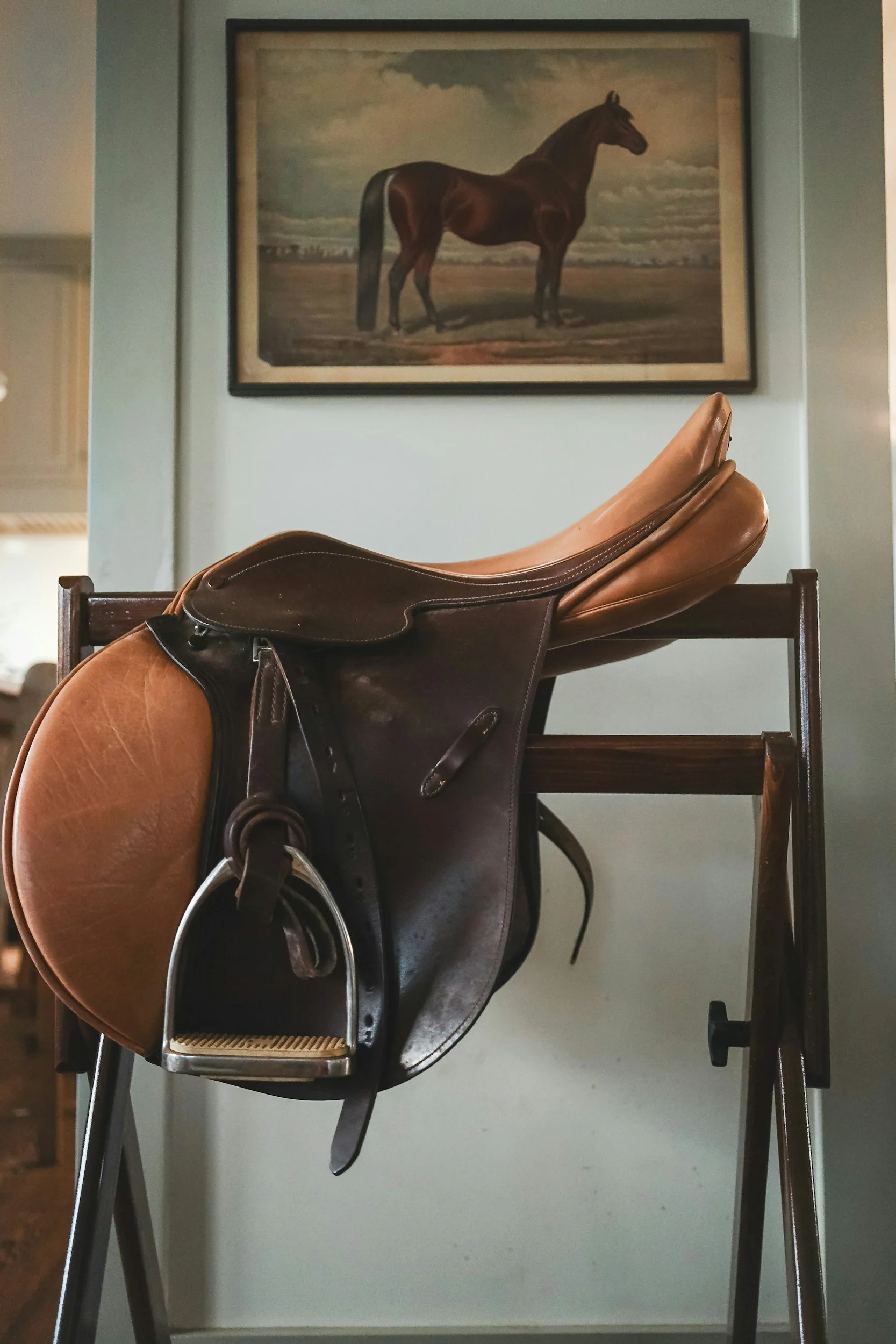
Here is a wonderful list explaining the 7 reasons for saddle fit issues from Rod Nikkel’s Saddle Trees website Reasons for "Saddle Fit" Issues Part One. He has a great in-depth explanation on saddle fitting:
A) Incorrect position of the saddle on the horse. If the saddle is placed where it doesn't belong, the shapes can't match and nothing else you do will make any difference.
B) A problem with tree/horse interaction. The tree is built OK. The horse is built OK. But the shape or size of the tree doesn’t match the contours of the horse’s back.
C) A fault in the construction or integrity of the saddle tree.
D) A fault in the construction or integrity of the saddle.
E) An anatomical “fault” in the horse - something that is beyond the bounds of “normal”.
F) Problems in the way the horse is saddled, with the padding or with the other tack used.
G) Problems with the rider or the way they ride.
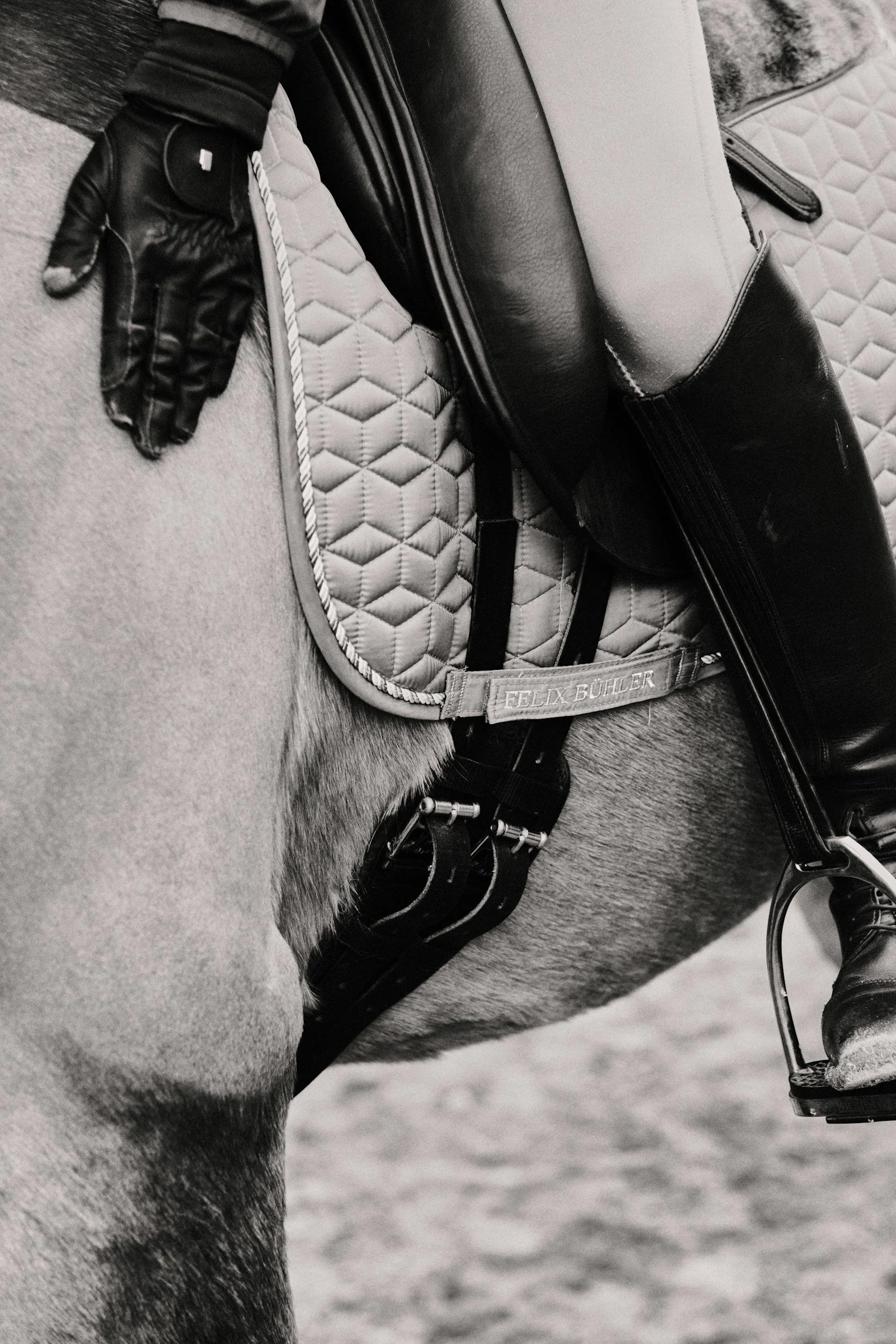
English saddles rely on close contact and precise balance, making proper fit especially critical. For a properly fitting saddle, some of the important parts of the saddle for the horse are the saddle tree, the gullet, the panels and the girth billets.
The saddle tree is the inside frame that gives the saddle its shape. The saddle tree must match the horse’s back shape and wither width so that the saddle distributes the rider’s weight evenly. The size of the horse’s shoulders dictates the tree size; the wider the horse’s shoulders, the wider the tree needs to be. If the tree is too narrow, the shoulders can be pinched, resulting in a reluctance to go forward (imagine a too-tight shirt that makes moving more restricted), pressure points leading to potential sores from rubbing (and eventually leading to the growth of white hairs), and inflammation caused by the pinching. If there is long term inflammation, permanent changes can occur to the scapular cartilage (the top part of the shoulders). It can also develop into a hollowing in the muscle behind the shoulders, which is caused by muscle fiber death due to long-term pressure. This muscle damage can become permanent and should definitely result in getting a new saddle immediately.
If the tree is too wide, the spine will not have enough room to flex under the saddle. There should be 3 - 5 fingers-width of room between the top of the gullet (the channel that run underneath the saddle) and the horse’s spine, to allow for clearance when the spinus processes and musculature flex upwards.
The withers should also have 2 -3 fingers worth of clearance in the front of the saddle, under the pommel.
The saddle tree angle must be the same as the angle of the horse's shoulder, about 2 to 3 inches behind the back edge of the shoulder blade. With a rider in the saddle, the amount of pressure down through the saddle should be even from the top of the panel to the bottom, indicating that the tree angle is appropriate. Place a hand under each panel and run it down the length of the shoulder. The pressure on the hand should be equal from top to bottom. Make sure to test both the right and left side on the saddle.
Additionally there are panels, pillow sections, that flank each side of the spine (they also run down behind the shoulders as discussed above with the tree angle). The panels can have uneven contact with the horse’s back when they are improperly flocked or the horse has muscle atrophy or hypertrophy in that area. Bridging can occur when the panels do not evenly distribute the weight of the rider, so that there is less contact in the middle of the seat versus the front or back of the saddle. Rocking occurs when there is contact in the middle of the seat but not even contact in the front and back of the saddle.
The length of the saddle should never go beyond the 18th, and last, rib of the horse. Further back than that, the horse does not have the stability of the ribs to offset the weight of the saddle and rider. The horse’s back is too weak beyond the ribs to carry that weight.
Girth alignment: When the girth is in proper position in the girth groove, the girth billets should hang straight down and not angle forwards or back. If you are having problems with your saddle slipping forwards or back, check the girth alignment first, because your saddle will move until the billets hang straight down. This necessitates a saddle that has the proper aligned girth billets for the type of girth groove the horse (or pony) has or you will be need to have the girth points changed by a saddle fitter.
Poor saddle fit for the horse can lead to alteration in movement, soundness issues, an unwillingness to perform and ultimately to long-term resistance, resulting from muscle and skeletal changes. These issues can result in behavioral issues that are often misinterpreted as training problems.
While both English and Western disciplines have different styles of equipment, the underlying principle is the same: tack must match the individual horse’s anatomy. Horses vary widely in back shape, wither height, shoulder angle, and mouth conformation. A one-size-fits-all approach does not work. Regular fit checks are important, as a horse’s shape can change with age, conditioning, weight gain or loss, and changes in workload.
Correct saddle fit allows the horse to move freely, use their body correctly, and remain relaxed and responsive under the rider, allowing the horse’s shoulders to rotate freely and encourage correct engagement of the back.
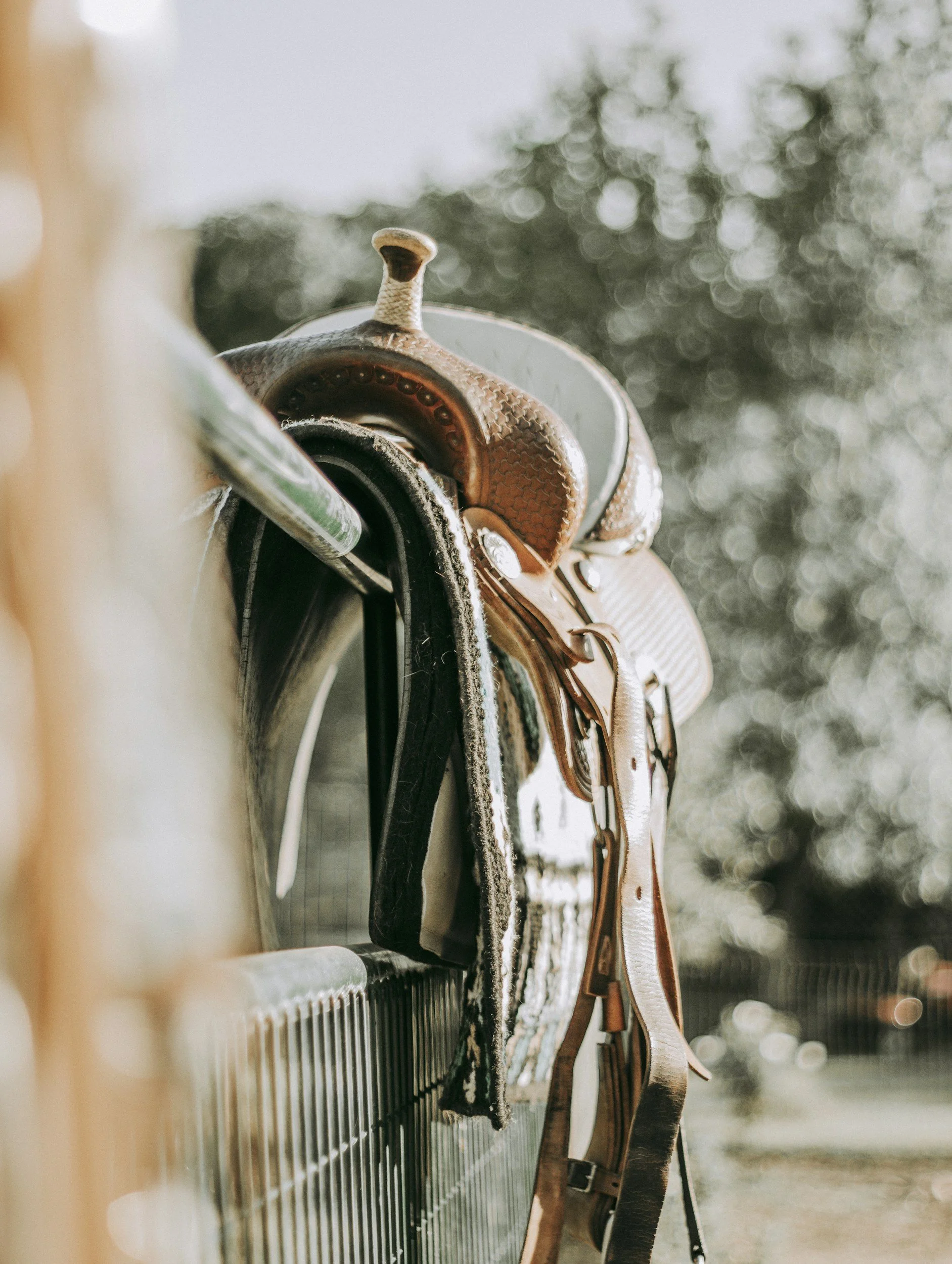
Western Saddles
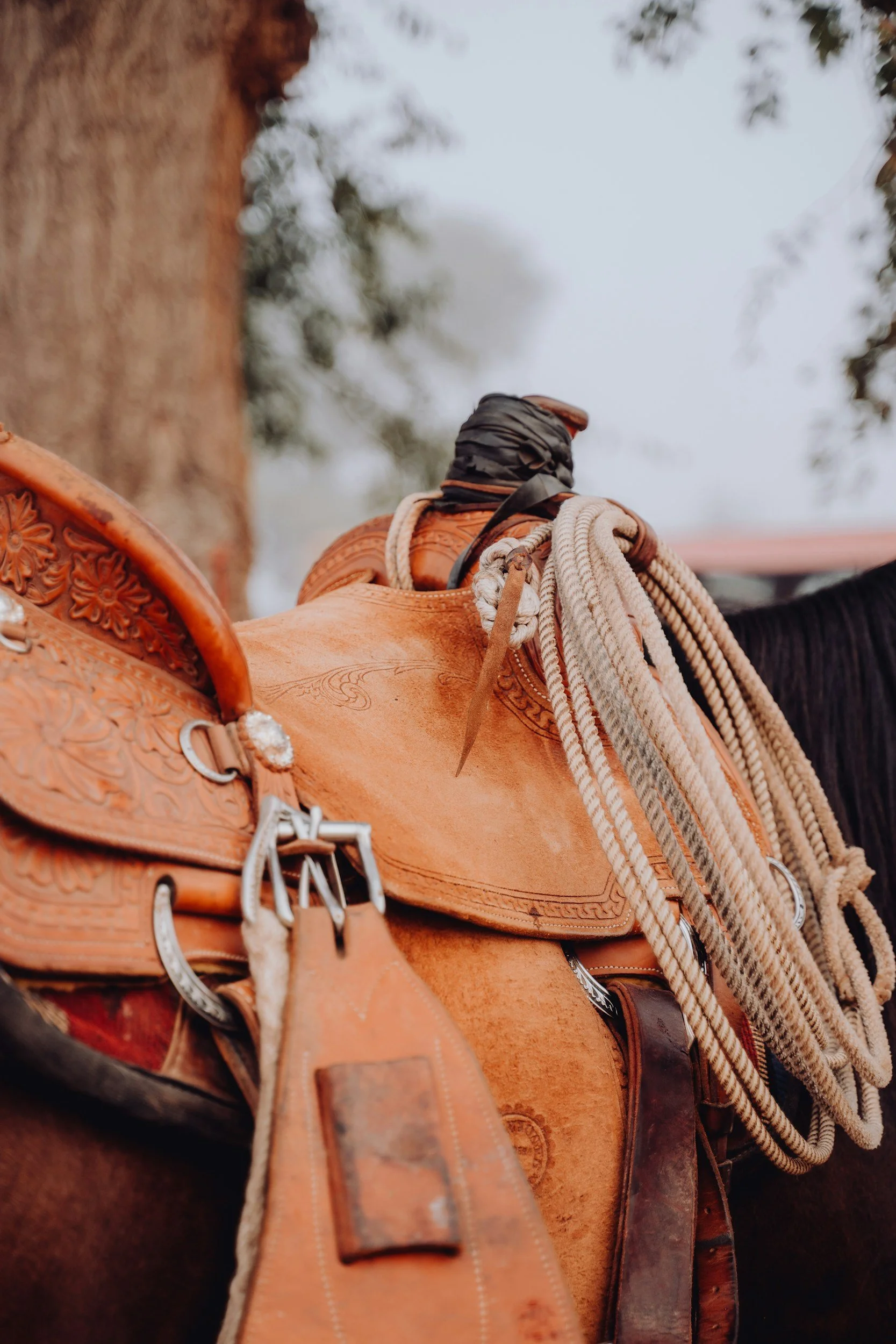
Western saddles distribute weight over a larger surface area and are designed for long hours of riding, but they are not forgiving of poor fit. The saddle tree is the foundation of fit; bar angle, bar length, and gullet width must all suit the horse’s back. A tree that is too narrow will pinch and create pressure points, while a tree that is too wide may sit too low and become unstable.
Because Western saddles are often heavier, problems may not be immediately obvious, but can be just as damaging. Dry spots under the saddle, white hairs, or soreness after riding can indicate uneven pressure. Proper skirt length and bar contact are also important so that the saddle does not interfere with the horse’s loins or shoulders.
Other saddle issues are not specific to discipline: saddle leaning to one side or the other (could also be caused by rider imbalance), saddle moves forward or back, saddle pad/blanket “slips” out from under saddle. A note on saddle pads: if your saddle pad is too thick it could make a saddle that is well suited to your horses become one that has pressure points.
Please make sure that you palpate your horse’s saddle area before you saddle, every time. This will give you a baseline level of pain and let you know if there are any changes.
Girths
Girth galls or cinch sores are areas of hair loss, scabs, weeping wounds that can be hot, uncomfortable spots that the girth or cinch rub over. This could be due to the saddle being in the incorrect position on the horse’s back (perhaps too far forward and rubbing against the “armpits”), girth sitting in the wrong spot, the wrong girth shape for the girth groove, the material being abrasive to the horse’s skin. If your horse develops a girth gall, call your vet and do not put any more equipment in that area (no girth, no surcingle, etc).
English and Western Bridles and Bit Fit
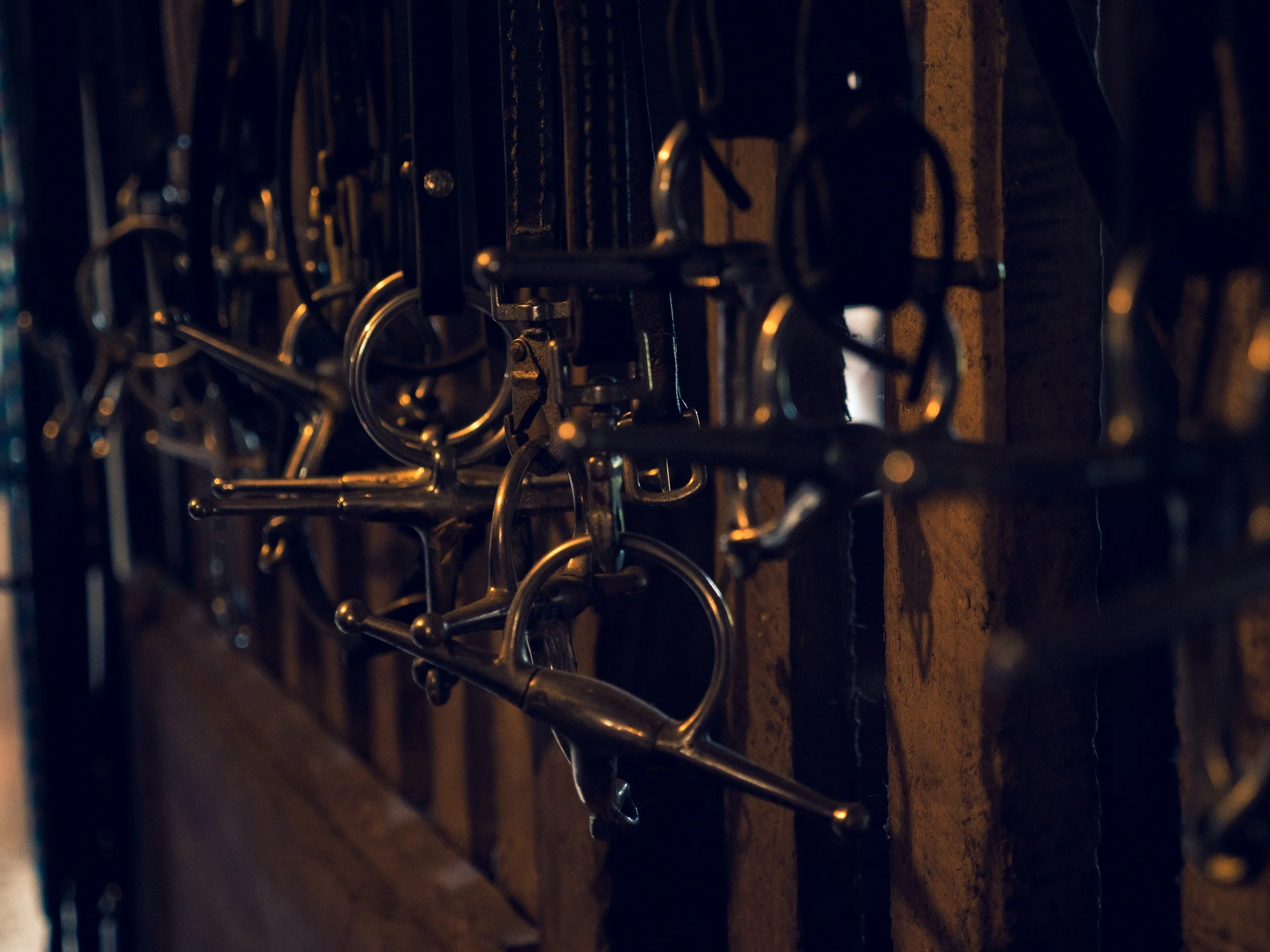
Bridle fit is just as important as saddle fit, particularly when it comes to the bit.
The horse’s mouth is a relatively small space that contains the tongue, bars (the toothless portion of the lower jaw), teeth, and the palate. A bit that is too narrow in length will pinch the corners of the horse’s lips, causing pain and possible sores. A bit that is too long can slide excessively from side to side, reducing clarity of communication and potentially banging against the teeth.
Thickness plays a major role in comfort. While thicker bits are often described as "milder," this is not universally true. In a horse with a fleshy tongue and low palate, a thick bit can crowd the mouth, leaving little room for the tongue to sit comfortably. When rein pressure is applied, the bit may press upward into the palate or compress the tongue excessively, leading to head tossing, gaping, or resistance. Conversely, a very thin bit concentrates pressure onto a smaller surface area of the bars and tongue, which can feel sharp or severe if used with heavy hands.
Proper bit fit allows the horse to carry the bit quietly, chew softly, and respond calmly to the rider’s aids without resistance or anxiety. Observing how the horse carries the bit, chews, salivates, and responds to contact provides valuable feedback about fit.
Tack Fit Checklist for Riders and Owners
Check wither and spinal clearance before and after mounting.
Ensure even contact along the panels or bars without dry spots after riding.
Look for white hairs, swelling, soreness, or behavioral changes.
Confirm the bit width allows slight clearance without pinching.
Assess whether the bit thickness suits the horse’s tongue and palate space.
Reevaluate fit after conditioning changes, weight fluctuation, or muscle development.
In conclusion, proper tack fit is not a luxury, but a necessity for every horse, regardless of discipline. Saddles and bridles that fit correctly promote comfort, trust, and longevity, while poorly fitted equipment can undermine even the best training. Taking the time to assess fit, seek professional guidance when needed, and adjust equipment as the horse changes is one of the most important responsibilities of any rider or owner.

Blog Post Four: My Favorite Horse-Related Podcasts
It all begins with an idea.
The Horse First by Dr. Audrey DeClue
The Equine Functional Posture Podcast with Dr. Raquel Butler & Sophie Vandenberg
The Equine Vet Connect
Mary Wanless - Ride With Your Mind
Feed Room Chemist : An Equine Nutrition Podcast
No Bucks Given
Cowhorse Full Contact - super funny podcast
Patrick King & Special Guests